
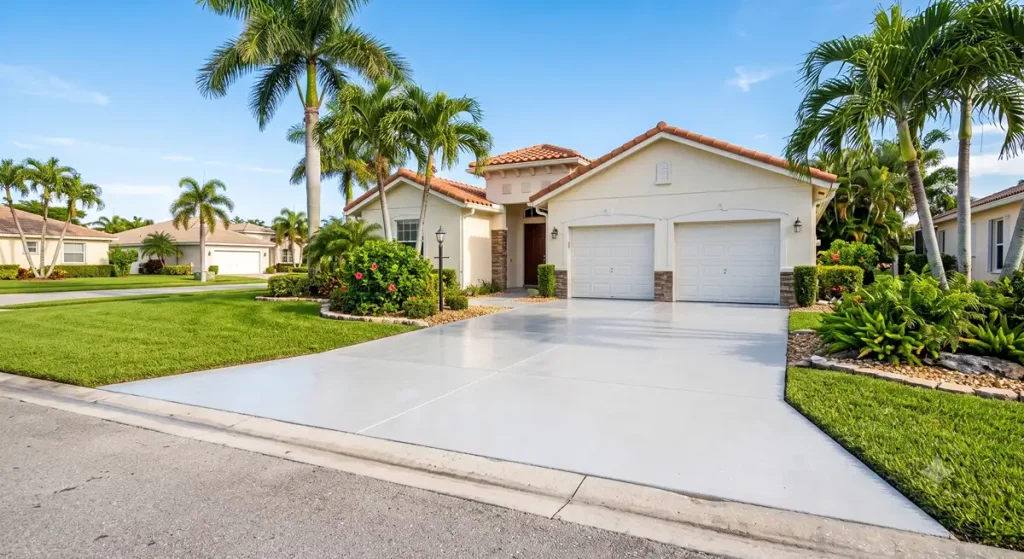
Most homeowners in Hollywood, FL think about their driveway once a year — usually when the HOA sends a warning letter or a family member nearly slips walking in from the car.
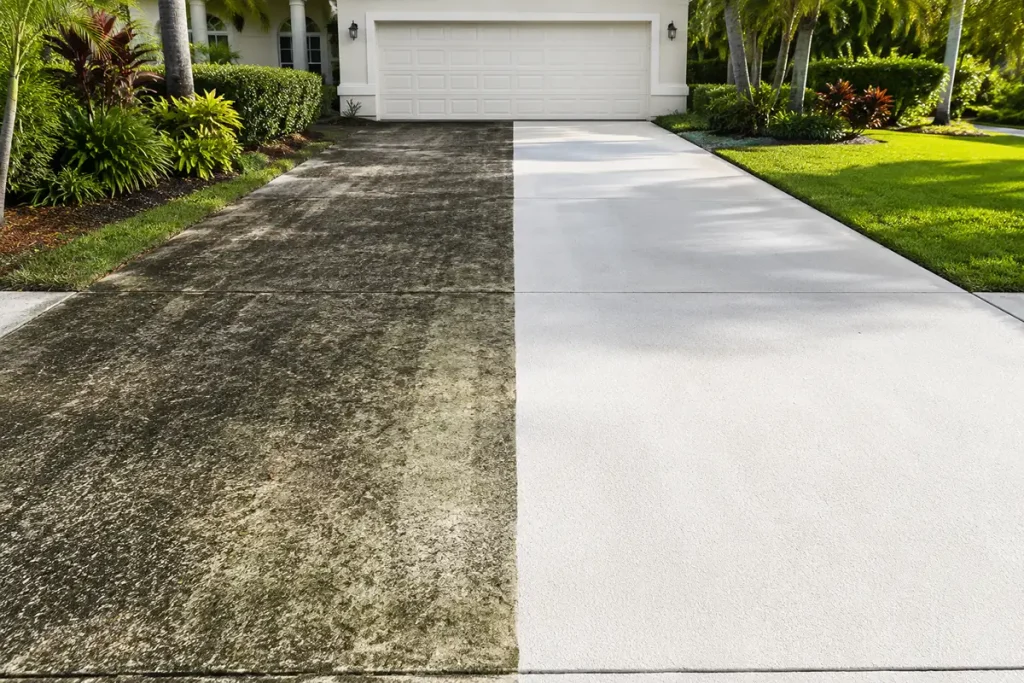
The reality is that South Florida’s climate doesn’t give concrete driveways a break. Between the relentless summer storms, intense heat, and humidity that never fully lets up, porous concrete surfaces here collect mold, algae, and organic staining at a pace that surprises most people who’ve moved from drier states.
Knowing when to clean — and what to look for — saves you from expensive problems down the road.
The General Rule of Thumb for South Florida Driveways
The Recommended Cleaning Frequency (1–2 Times a Year)
For most concrete driveways in Hollywood, FL and surrounding Broward County neighborhoods, professional cleaning twice a year is the baseline recommendation.
The first session is best scheduled in late spring — typically April or May — before the summer rainy season kicks in. Cleaning at this point removes the buildup from winter and gives the concrete a cleaner surface heading into the wettest months.
The second cleaning works best in late fall, around October or November, once the heaviest rainfall has passed. At that point, months of storms and heat will have fed a fresh cycle of mold and algae growth that needs to be addressed before it has the chance to embed deeper into the surface.
For some properties, once a year is enough. For others, every six months is the minimum. The difference comes down to a handful of factors specific to your property.
Why Our Climate Accelerates the Need for Concrete Cleaning
Concrete is porous. It holds moisture, and in South Florida, there’s no shortage of it.
Hollywood’s rainy season runs from June through November. During those months, afternoon storms arrive almost daily, saturating concrete surfaces and keeping them damp. The heat that follows doesn’t fully dry them out — it simply warms the moisture sitting in the pores, creating conditions that mold spores and algae reproduce in rapidly.
This cycle repeats dozens of times over the course of a single summer. By the time the rains slow down in November or December, a driveway that was clean in May can look like it hasn’t been touched in years. This pattern is consistent across Broward County — from the beachside neighborhoods of Hollywood to the inland communities of Pembroke Pines — because the entire region shares the same seasonal moisture cycle.
Critical Factors That Influence Your Driveway Cleaning Schedule
Two identical homes on the same street can have very different cleaning needs. What happens on and around the driveway matters as much as the climate itself.
Tree Canopy and Foliage Cover
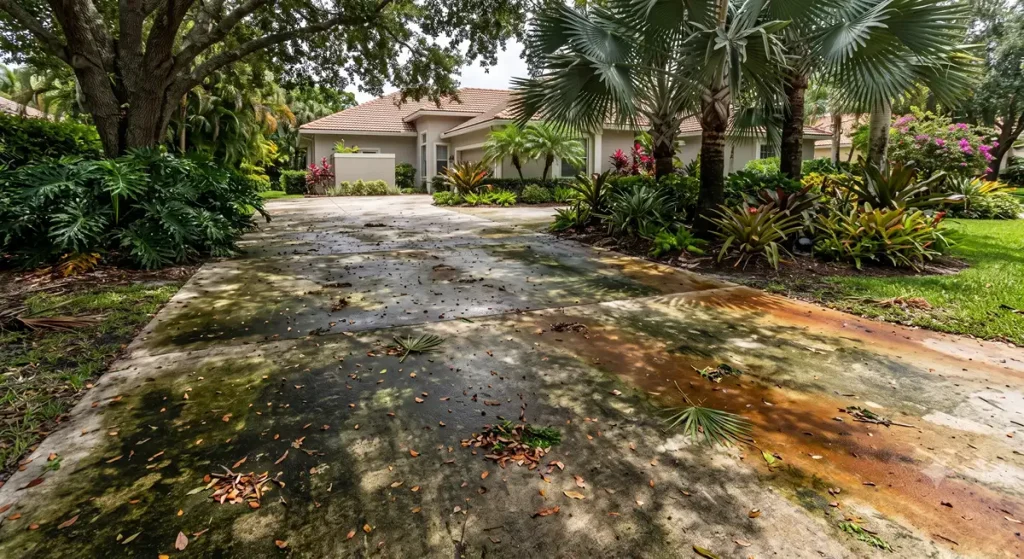
Properties with overhanging oaks, large palms, or dense hedges near the driveway face accelerated staining throughout the year.
Leaves and organic debris collect on the concrete surface, trap moisture, and decompose directly onto the slab. As they break down, tannins from the leaf matter stain the concrete in dark, irregular patches. Sap drips from trees create sticky spots that attract dirt, and overhanging canopy keeps portions of the driveway shaded and damp far longer than open concrete would stay. In practice, a shaded driveway in a heavily canopied yard can show visible darkening within eight to ten weeks of a professional cleaning during peak summer months — noticeably faster than an exposed slab under the same rainfall.
For these properties, a six-month cleaning schedule is typically more realistic than once a year.
Heavy Traffic and Vehicle Leaks
Driveways that handle multiple vehicles daily accumulate oil drops, transmission fluid drips, and exhaust soot faster than lightly used surfaces.
A slow leak from an older vehicle might seem minor, but over weeks it leaves a spreading dark stain that bonds with the concrete. The same applies to delivery trucks pulling onto the apron of the driveway — a single visit from a heavy vehicle can leave tire marks and oil contact that won’t rinse away on their own.
If your driveway handles regular vehicle activity, factor that into your cleaning timeline. Catching oil stains early — before they’ve had months to penetrate the pores — makes a significant difference in how completely they can be removed.
Homeowners Association (HOA) Strictness in Broward County
Hollywood, FL and many surrounding communities operate under HOA agreements that include visible exterior maintenance standards. Driveways and walkways are commonly inspected for discoloration, staining, and visible mold.
In neighborhoods like Emerald Hills and many of the townhome communities throughout Pembroke Pines, HOA boards issue violation notices for driveways that show significant darkening or staining — even when the homeowner hasn’t noticed a problem yet. HOA inspections in some Hollywood communities occur as frequently as quarterly, meaning a driveway that looks acceptable in March can be flagged by June without any deliberate neglect.
If your community is HOA-managed, staying ahead of their inspection cycle is the smarter approach. Booking concrete cleaning for your Hollywood, FL home on a consistent schedule — rather than reacting to violation notices — is almost always less stressful and less expensive in the long run. The same HOA guidelines that cover driveways often extend to fence lines and gate areas, which is worth keeping in mind when scheduling exterior maintenance. A fence cleaning service paired with your driveway appointment keeps the full front exterior compliant in a single visit.
The Dangers of Waiting Too Long Between Cleanings
Putting off a driveway cleaning feels harmless. The driveway still functions. But over time, the consequences go beyond aesthetics.
Slip Hazards from Algae and Mold
Black algae is deceptive. In dry conditions, it looks like a dark discoloration on the surface. Once wet — after a summer afternoon storm, a sprinkler cycle, or even morning humidity — it turns into a slick biofilm that offers almost no traction. The organism responsible, Gloeocapsa magma, produces a dark pigmented sheath that is naturally slippery when saturated, and it cannot be removed by rinsing alone.
Carrying groceries from the car, walking barefoot from the pool, or simply rushing to get inside during a downpour can turn an algae-coated driveway into a genuine safety hazard. The slope on most driveways makes this worse, since water runs downward and concentrates where the algae growth tends to be thickest.
This isn’t a theoretical concern. Falls on slippery driveways are among the most common household injury scenarios during South Florida’s rainy months.
Permanent Staining and Concrete Deterioration
The longer oil, rust, or decomposing organic matter sits on porous concrete, the deeper it migrates into the slab.
Motor oil that’s been baking on a sun-exposed driveway for a year is significantly harder to lift than a fresh drip from last week. Decaying leaves left through an entire wet season can leave tannin stains that reach well below the surface layer. Rust from iron sprinkler water, once oxidized and embedded in the concrete’s pores, often requires specialized chemical treatment rather than standard pressure washing. South Florida’s iron-rich well water — commonly used for lawn irrigation throughout Broward County — is one of the most frequent causes of rust staining we see on otherwise clean driveways.
Beyond staining, algae and mold that goes untreated gradually breaks down the concrete surface itself. Over years, this contributes to surface pitting and erosion that no amount of cleaning can fully undo. The same biological degradation affects roofing materials — algae that goes unaddressed on shingle surfaces can void manufacturer warranties and accelerate granule loss. A roof inspection and soft wash cleaning is worth scheduling alongside your driveway service if you’ve noticed dark streaking on your roofline.
DIY Maintenance Tips to Extend the Clean Look
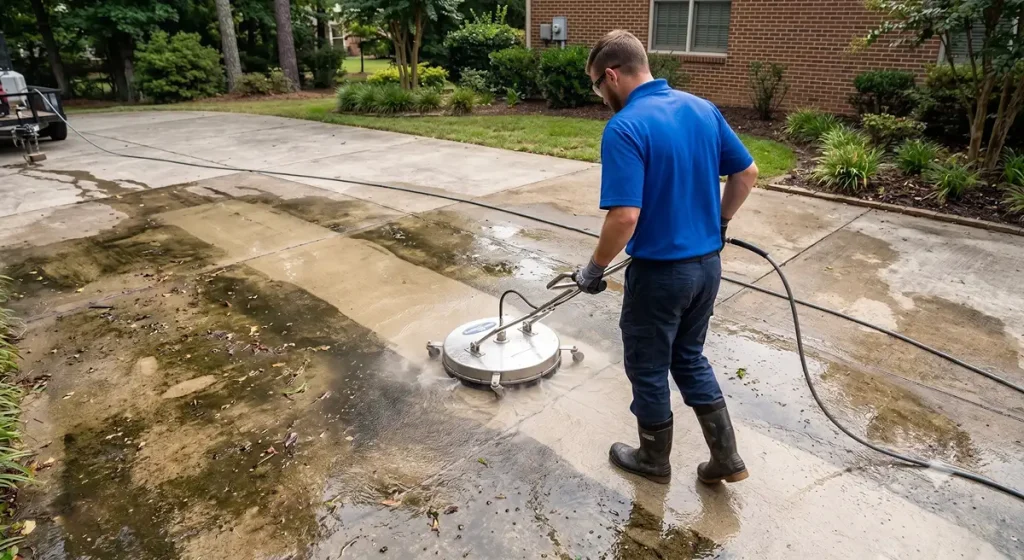
Professional cleaning twice a year does the heavy lifting. Between sessions, a few simple habits can keep your driveway looking significantly better for longer.
Periodic Sweeping and Spot Treatment
Sweeping the driveway weekly — especially during fall and winter when leaves drop heavily — removes organic debris before it has a chance to decompose on the surface.
For fresh oil drips, applying an absorbent material like cat litter or baking soda immediately after the spill, then scrubbing with a stiff brush and dish soap, can prevent the oil from soaking in. Speed matters here. A fresh stain treated the same day is far easier to manage than one that’s had a week to settle.
These steps don’t replace a professional deep clean, but they meaningfully extend how long a freshly washed driveway stays bright.
Applying a Professional Concrete Sealer
After a professional deep clean, applying a quality penetrating concrete sealer is the single most effective step for extending the results.
A sealer works by filling the microscopic pores in the concrete surface, creating a barrier that resists moisture, oil, and the organic spores that anchor mold and algae growth. A well-applied sealer can keep a driveway looking significantly cleaner for up to two years between professional sessions.
This is especially worth considering for driveways in shaded or high-traffic areas where re-growth happens faster. Ask about sealer application as part of your next cleaning session — it’s an add-on that pays for itself in reduced cleaning frequency.
Frequently Asked Questions
Why does concrete in South Florida turn black so quickly?
The dark discoloration is caused by Gloeocapsa magma — a type of black algae — along with mold spores that are naturally present in South Florida’s air. These organisms feed on the limestone present in most concrete mixes. The region’s constant heat, high humidity, and heavy rainfall provide near-perfect conditions for them to anchor, feed, and multiply. Once the colony is established, it spreads laterally across the surface and darkens significantly over a single wet season.
Will rain wash away the cleaning solutions used on my driveway?
Our team monitors local weather conditions closely before scheduling any job. We use fast-acting, biodegradable pre-treatment solutions that soak into the concrete and begin breaking down organic compounds well before rinsing begins. A light rain shower after treatment won’t compromise the results. For sessions involving concrete sealer application, we do require a dry window of at least 24 hours for the sealer to cure properly.
How long does a clean driveway last before mold grows back?
Most professionally cleaned driveways in South Florida stay noticeably bright for six to twelve months under normal conditions. Properties with heavy tree cover, frequent vehicle use, or poor drainage tend toward the shorter end of that range. Applying a concrete sealer directly after cleaning acts as a moisture barrier and significantly slows re-growth, extending the clean period to up to two years in many cases.
Does driveway cleaning remove rust spots from lawn sprinklers?
Rust stains from iron-rich well water or irrigation systems are a separate issue from standard mold and algae buildup. They require specialized rust-removing agents — oxalic acid-based treatments are commonly used — rather than standard pressure washing detergents. Standard surfactants won’t lift iron oxide effectively. Let us know about any rust spots during your surface assessment so the right treatment is applied from the start.
Can I use bleach to clean my driveway myself?
Household bleach will kill surface-level mold, but it has real drawbacks when applied to driveways. It’s usually too diluted to reach mold that has embedded below the surface layer. Applied without proper rinsing, bleach runoff kills turfgrass and damages flower beds. And it does nothing to address oil stains, rust, or tannin staining. A professional service uses correctly diluted, commercial-grade solutions paired with high-volume water rinsing that thoroughly neutralizes any overspray before it reaches surrounding landscaping.
Suspect it’s time for your next cleaning? Request a property surface assessment today and check available cleaning slots for this week. We’ll evaluate your driveway’s condition and give you an honest timeline — no pressure, no guesswork.